Build Confidence with Self Defense Classes Condition 1 Combat Center
Confidence is not a switch you flip. It is a byproduct of competence earned through honest reps, practical coaching, and clear feedback. That is exactly why self defense training works when it is delivered with structure and realism. At a place like Condition 1 Combat Center, where the mat time is grounded in mixed martial arts fundamentals and everyday scenarios, you do not just collect techniques. You understand when, why, and how to use them, and just as importantly, when not to.
This guide walks through what to expect from self defense classes at a facility that blends MMA, Brazilian Jiu Jitsu, Muay Thai, and boxing. It also explains how those disciplines translate to practical confidence, the kind you carry into a late walk across a dim parking lot or a tense conversation that might turn physical. I am writing from the point of view of a coach who has watched absolute beginners learn to breathe, to move, to protect themselves, and over time to help others do the same.
What sets a self defense program apart
Plenty of schools advertise real-world self defense. Only a few deliver consistent results because they build on the pressure-tested skills that come from fighting arts. A good program anchors to fundamentals from an MMA gym, combines positional control from BJJ, impact management from Muay Thai and boxing, and then wraps all of it in scenario training that respects legal, ethical, and emotional realities.
Condition 1 Combat Center functions that way. If you look up a Condition 1 Combat Center MMA gym or browse condition1combat.com for MMA training options, you will see a mix of classes. The value is not in the menu. The value is in how the instructors layer material. Beginner self defense sessions often start with posture, base, and frames, then quickly move into the first two or three ways to manage distance. You learn to keep your hands up without telegraphing panic, to square your hips when someone closes the gap, and to move your feet before your opponent moves your head.
A short anecdote captures the difference. A newer student, a nurse who worked nights, came in after a rough shift. She had been followed to her car the previous week. Her hands shook in her first class. Six weeks later, after drilling grip breaks, fence hands, and voice projection along with simple knees and palm strikes, she found herself naturally adjusting her angle when a stranger crowded her in a hallway. She did not hit anyone. She used her posture, her eyes, and a step to the side. That small moment was not dramatic, but it is the quiet kind of confidence these classes are supposed to build.
The role of each discipline
Self defense is not about mastering everything. It is about owning a few high-percentage skills and knowing where they slot into a messy situation.
Brazilian Jiu Jitsu gives you the map when the fight gets tied up. In a bjj gym like Condition 1 Combat Center, you will learn to pummel for underhooks, recover guard if you fall, stand up in base, and control a larger person without relying on brute strength. Survival, not sport points, drives the lesson plans. You work mount escapes, clinch entries that smother strikes, and positional pins that let you shout for help or create space to leave. The detail that often flips a switch for beginners is learning how to hide your neck and jaw on the ground, how to angle your hips so you cannot be crushed flat, and how to connect elbows and knees as a shield. Those micro-skills lower panic and raise your choices.
Muay Thai and boxing teach you to manage distance and to hit without hurting yourself. In a muay thai gym environment you learn checks, teeps, knees, and elbows, which are far more forgiving than haymaker punches for new hands. In a boxing gym format you work jab mechanics, head movement, and the footwork that keeps you from getting corralled between a wall and a threat. The goal is not to trade. It is to create a window, land a clean, simple strike if needed, and leave. If you peek into Condition 1 Combat Center Muay Thai or boxing classes, you will see a lot of padwork and partner drills that emphasize balance and vision over power. That foundation transfers directly into self defense.
Mixed martial arts training ties it all together. MMA practice at Condition 1 Combat Center, or as you might find listed on condition1combat.com for MMA training, blends entries from striking into clinch control and takedown defense. Even in self defense classes, a little MMA-style integration goes a long way. For example, learning to collar tie into a knee to the thigh, then shuck the head and exit at an angle, gives you a plan that does not rely on adrenaline alone. You are not preparing for combat center a cage fight. You are stitching together a simple flow that works when a situation moves from words to contact in a blink.
What to expect in your first 90 days
New students often want a roadmap. You will not become an expert in three months, but you can become a safer, calmer version of yourself.
- Week 1 to 2: Stance, fence hands, breath control under light pressure, basic palm strikes and elbows, the knee shield and technical stand-up from the ground.
- Week 3 to 4: Grip breaks, wrist pummeling, clinch positioning against a wall, jab and cross with head movement, knee to thigh and shin block.
- Week 5 to 8: Bear hug and headlock defenses with immediate frames, guard retention and hip escapes, pad rounds emphasizing exit footwork, verbal boundary setting.
- Week 9 to 12: Scenario rounds with controlled resistance, simple takedown defense, underhook battles, timed movement drills that add fatigue and noise, role-play that includes bystanders and de-escalation.
People progress at different speeds. I have seen a 50-year-old father of three pick up technical stand-up in one night because he already moved well from hiking. I have also seen a former college athlete take three weeks to stop holding his breath during clinch work. Both are normal. Coaches at a place like the Condition 1 Combat Center BJJ gym or MMA gym are used to customizing, because real learning is messy.
The first class nerves
Everyone walks in with a story running in their head. Some worry they are too old. Some think they are too out of shape. Others worry they will freeze if someone puts hands on them. Good instructors address those concerns before the warm-up ends. Expect a brief chat about goals, an explanation of the day’s focus, and clarity around contact levels. Beginners should leave with three things: one technique they can already do passably well, one drill they can practice at home in two minutes a day, and one piece of language for setting boundaries.
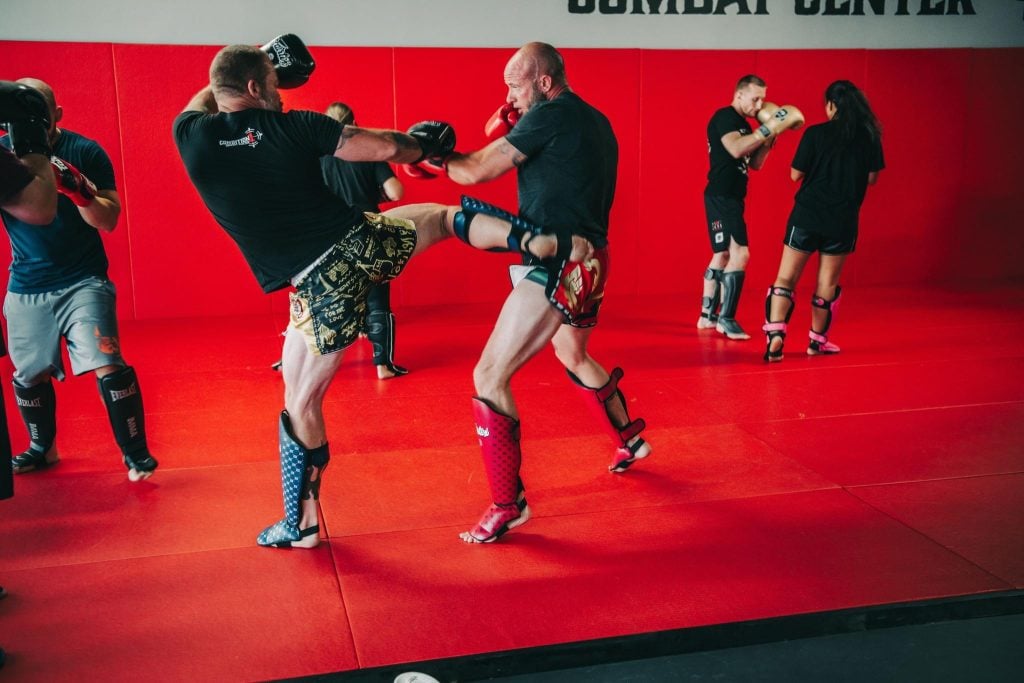
A sensible self defense class at Condition 1 Combat Center starts with stance and movement. You will likely work a few rounds of partner drills that look almost boring from the outside: framing at the collarbone without locking out your elbows, stepping off the tracks when a partner walks into you, and keeping your chin tucked while you talk. Then you add one or two strikes on pads, usually palms or elbows, because they are durable and safe to learn. Finally, you explore a scenario for five to ten minutes. That scenario might be someone grabbing your wrist at a crosswalk or pinning you against a car door. The goal is not to win a fight. It is to get to a safer position without freezing.
Safety without illusions
Effective self defense training respects risk. You need enough resistance to test if your technique works, but not so much that you get injured learning it. Coaches do this by modulating intensity. Pad work and controlled partner drills build motor patterns. Then you add light resistance, often with constraints. For example, one partner tries to press the other to a wall while the defender can only use footwork and frames for 20 seconds. This isolates the skill of angling off, and it keeps the ego out of the drill. Later, you add strikes or a second variable like verbal commands.
Condition 1 Combat Center instructors also keep an eye on concussions, joint injuries, and overtraining. The self defense track should not feel like a fight camp. If a gym pressures you to spar hard in week one, or if coaches dismiss questions about safety gear, look elsewhere. Healthy progress feels sustainable. You should be sore, a little tired, and proud, not banged up or foggy.
How scenario training builds real confidence
Technique without context cracks under stress. Scenario training gives your brain a dress rehearsal. The better programs simulate a range of problems. That includes a surprise grab in a tight space, a verbal confrontation with a push, a swing from the outside, or a situation where you have a companion who cannot move well.
In practice, that looks like a short script and a countdown. You start in a parking-lot stance with a bag slung over one shoulder. A partner approaches with hands in pockets and asks for something vague. You use your fence, set your angle, and give a clear verbal boundary. If they advance, you create space with a push to the chest, an exit step, and a shouted command. The round ends as soon as you get beyond an agreed line. Another round might start on the ground with a partner kneeling on your legs. You build frames, shrimp your hips, and stand up in base while the partner adds just enough weight to make you work.
Most students find their heart rate jumps during these drills. That is the point. You learn to manage your breath and decision-making under a small dose of adrenaline. Over time, that practice transfers to other stressful moments, not just potential fights. A manager in one of our groups started using the same calm voice from scenario drills to de-escalate a heated office dispute. Confidence carries over.
Why BJJ is so useful, even if you never want to grapple
People sometimes shy away from Brazilian Jiu Jitsu because they picture sweaty tournament matches and lapel chokes. Self defense BJJ has different aims. You learn a short list of survival-first positions and exits. Practically, that includes standing up safely when knocked down, defending your neck in scrambles, escaping headlocks, and pinning someone briefly so you can disengage. The belt system can be motivating, but you do not need to chase stripes to get value.
In the Condition 1 Combat Center Brazilian Jiu Jitsu training curriculum, you will likely see a recurring focus on frames and hip movement. New students who grasp those two ideas early make faster progress. Frames create space. Hips create movement. If you can connect your forearms to your opponent’s collarbones, tilt your hips away from the pressure, and step your outside leg through, you have three exits instead of zero. That shift in options is where confidence grows. You go from hoping someone will save you to knowing you can buy yourself time and space.
The striking you actually need
Most real altercations are decided by distance and timing, not by fancy combos. The self defense striking curriculum at a gym like Condition 1 Combat Center focuses on tools that land under stress and do not break your hands. Palms to the jawline or nose, elbows from short range, knees to the body or thigh, and low-line kicks to disrupt balance are all staples. A sharp jab is still valuable, because it sets distance, but new students do well to emphasize palms over closed fists until their mechanics are dialed in.
Drills should reflect that priority. You will hit pads with combinations that end in exits. For example, palm, elbow, knee, step off. Or jab, frame, disengage. It feels less cinematic than a flurry, yet it mirrors how a normal person can move under stress. You will also learn to read tells. A weight shift before a swing, shoulders squaring, eyes dipping. When you can spot those indicators, you stop being surprised. The fear shrinks.
Pressure testing without breaking people
Nothing replaces rounds with resistance, but rounds do not have to mean full-on sparring. Many self defense classes at a mixed program like Condition 1 Combat Center use games that look like wrestling tag, clinch-only sparring, or limited striking with body shots and protective gear. The rules change based on the day's lesson. One day you might only be allowed to use underhooks and head position to pin your partner to a wall. The next, you defend against a wild swing with a clinch entry and knee, but your partner is not allowed to shoot a takedown.
By isolating variables, you can push the pace safely. Beginners learn faster when they are not overloaded. The confidence benefit is cumulative. Each small success under pressure tells your nervous system the story you want it to believe: I can handle this.
The culture matters more than the logo
People stick with training when the room is safe, demanding, and supportive. At Condition 1 Combat Center, the tone you want is professional, not macho. Coaches should correct carelessly aggressive behavior quickly. You will see advanced students help beginners find their feet rather than posture. That environment makes it easier to ask questions like, What if I am five foot two and the other person is six foot four? Or, What if my right shoulder is injured and I cannot post? Good coaches give alternatives without making you feel like a burden.
A sign of a gym worth trusting is consistency. If you visit condition1combat.com and the schedule shows self defense, BJJ, Muay Thai, and boxing, ask how the week’s lessons connect. You want a program that reinforces a few core ideas across classes. The stance you learned in boxing should show up in self defense scenarios. The framing concept from BJJ should pop up in clinch entries on Muay Thai night. When the disciplines rhyme, your learning compounds.
How to evaluate a self defense class before you commit
- Watch one full session without participating. Note how coaches explain contact levels and how they handle mismatched partners.
- Ask what a new student should know after 12 classes. Look for specific skills, not vague promises.
- Check whether scenario drills are part of the regular curriculum, not a once-a-year event.
- Look for clean mats, clear rules about hygiene and gear, and a culture of punctuality.
- Ask how the program addresses legal and ethical considerations, including when not to engage.
Women, older adults, and teens
Confidence grows fastest when training accounts for your reality. Women benefit from scenario emphasis on boundary-setting, pre-attack indicators like grooming gestures and distance closing, and immediate defenses for common grabs, especially wrist and hair control. Coaches should also address the psychological side, including the freeze response, and work with training partners who follow strict contact rules.
Older adults need options that do not punish joints. Expect more focus on inside position, balance, and using walls and angles to avoid being muscled. Technical stand-up, clinch framing, and knee strikes are often friendlier than high kicks or jumping movements. Sensible instructors adjust intensity and volume. That way, confidence comes from competence, not from pushing through pain.
Teens are a special case. They need boundaries and language as much as they need technique. A good program will include role-play around school settings, bus stops, and social media meetups that turn sketchy. The emphasis is on awareness, group dynamics, and escape over fighting. When teens feel they have scripts and exits, they make better decisions before a situation escalates.
Building a personal practice
Class time gives you the framework. Short, consistent solo practice cements it. Two minutes a day can move the needle if you pick the right drills. Technical stand-ups, shadow stepping with fence hands, and wall framing reps are perfect at-home work. Aim for quality over quantity. Set your phone for two minutes, breathe through your nose, and move with attention. That small habit builds coordination and calm. Over a month it changes how you feel when someone crowds your space.
If you work at the Condition 1 Combat Center BJJ gym or the MMA training sessions listed on condition1combat.com, ask a coach to write you a two-week microplan. Most coaches appreciate students who take ownership, and they will point you toward high-yield reps that fit your body and schedule.
The mindset that sustains progress
The most confident students are not the ones who hit hardest. They are the ones who treat training like a craft. They aim to be unremarkable at the right things: quiet footwork, hands that float where they belong, shoulders that stay soft until it is time to go, frames that appear before panic sets in. They respect adrenaline as a factor and train around it. They stay curious.
You will have flat days. You will forget a move you drilled last week. You might second-guess yourself after a scenario goes sideways. That is part of the process. A good coach will remind you to track wins that are easy to miss. You noticed the weight shift before the swing. You turned your hips before you framed. You breathed through your nose under pressure. Confidence grows in those small verdicts.
How confidence carries into daily life
Students often report changes that have nothing to do with fights. Better posture at work. A steadier voice in difficult conversations. More patience in traffic. That is not mystical. It is the product of breathing under load, of choosing a response while your heart rate climbs, of learning that you can change your position when pressure mounts. Training in a place like the MMA gym at Condition 1 Combat Center or during Brazilian Jiu Jitsu sessions teaches your nervous system that interruption does not equal danger. That creates room for better choices everywhere else.
One student, a teacher, used self defense class lessons to handle a parent conference that started heated. She set her stance behind her chair, kept her hands visible and relaxed, and spoke in short, clear sentences. The parent calmed down. No kicks, no takedowns, just presence. That kind of transfer is common, and it is the best advertisement for the work.
Practical expectations for results
It is wise to be realistic. A small person cannot magically overpower a large, committed attacker. Training narrows the gap by improving timing, positioning, and decision-making. It gives you options earlier. Escape rates improve when you act sooner and move cleaner. The body composition changes are a bonus. After three to six months, many students notice better sleep, improved balance, and a stronger core. That makes daily life feel easier and adds to the quiet confidence you are seeking.
If you are choosing between options, compare how the programs measure progress. Belts and stripes in Brazilian Jiu Jitsu are useful, but self defense progress should also be measured in scenario performance. Can you create space against a wall with a partner 20 pounds heavier who is actively trying to pin you? Can you maintain your fence under verbal pressure? Can you hold a conversation while moving your feet and keeping your eyes up? Those are functional benchmarks.
Getting started at Condition 1 Combat Center
If you are curious, the simplest step is to visit. Search for the Condition 1 Combat Center MMA gym or the BJJ gym on condition1combat.com and look at the beginner-friendly classes. Introduce yourself to the front desk, explain your goals, and ask to observe or try a trial class. Wear comfortable clothes, bring water, and arrive ten minutes early. Plan to learn a small number of techniques and to ask one good question. If the pace feels right, book your next session before you leave. Momentum helps.
You will see references across the site to Condition 1 Combat Center MMA training, Brazilian Jiu Jitsu training, Muay Thai, and boxing. Any of those classes can support your self defense goals, but if your priority is confidence in everyday situations, start with the self defense classes at Condition 1 Combat Center and add a BJJ or boxing session once per week. That blend covers the most common problems: distance management, basic striking, clinch and ground control, and getting up safely.
Final thoughts from the mat
Confidence is earned. It is the quiet result of doing what you said you would do three times a week for a few months, even when work runs late and you would rather go home. It is knowing what your hands should do when someone crowds you, and what your feet should do when the floor is slick. It is trusting that your breath will be there when you need it. Self defense classes at a place like Condition 1 Combat Center give you that, because they are built on real fighting skills, taught with care, and tested under controlled pressure.
If you want the kind of confidence that shows up when it matters, put yourself on the mat. Start small, stay consistent, and let the work change how you move through the world.
